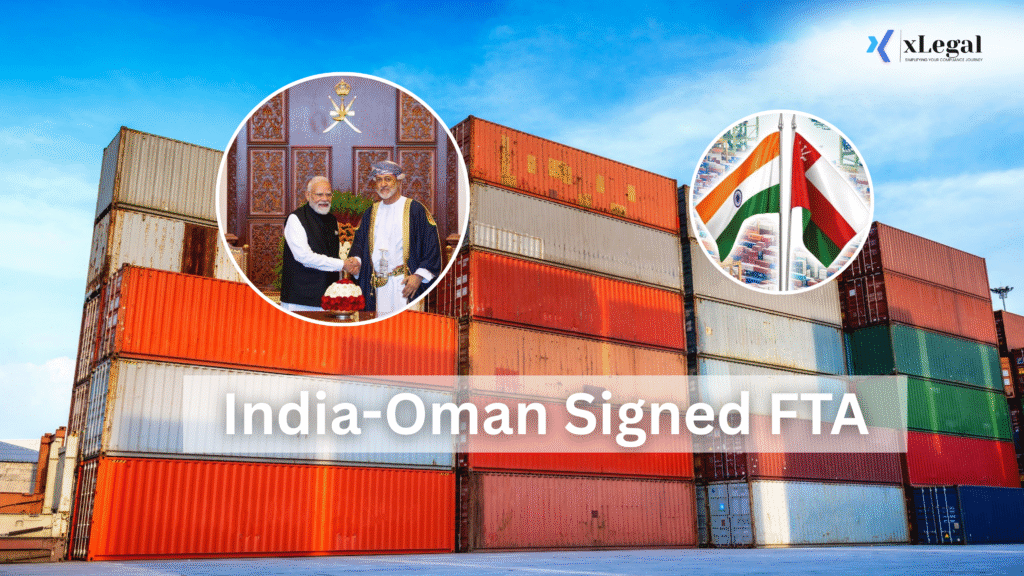
India–Oman FTA 2025: A Game Changer for Indian Exporters and Businesses
India and Oman have taken a major step toward strengthening their economic relationship by signing a Free Trade Agreement (FTA) on 18 December 2025. This agreement aims to simplify trade between the two countries by reducing or eliminating customs duties, easing regulatory barriers, and creating a more predictable environment for businesses.
For Indian exporters, importers, startups, and manufacturers, the India–Oman FTA opens new opportunities in the Gulf region and reinforces India’s growing trade presence in the Middle East.
What Is a Free Trade Agreement (FTA)?
A Free Trade Agreement (FTA) is a pact between two countries to promote trade by reducing tariffs, removing restrictions, and improving market access for goods and services. Unlike ordinary trade arrangements, an FTA provides clear rules that make cross-border trade faster, cheaper, and more transparent.
The India–Oman FTA focuses on:
1. Reducing customs duties on goods
2. Improving access to each other’s markets
3. Encouraging investments
4. Supporting smoother movement of goods and services
Why the India–Oman FTA Is Important
Oman plays a strategic role in India’s trade with the Gulf and African regions due to its location and strong logistics infrastructure. The FTA helps India deepen its economic ties with Oman while giving Indian businesses an edge in a competitive international market.
This agreement is also part of India’s broader strategy to expand exports, strengthen supply chains, and reduce dependence on limited markets.
Key Benefits of the India–Oman FTA
1. Duty-Free Access for Indian Exports
Under the FTA, a large majority of Indian goods will be exported to Oman at zero or reduced customs duty. This makes Indian products more affordable and competitive in the Omani market. Sectors expected to benefit include:
1. Textiles and apparel
2. Engineering and industrial goods
3. Pharmaceuticals and medical products
4. Automobiles and auto components
5. Agricultural and processed food products
6. Gems and jewellery
Lower tariffs directly translate into higher export potential and better profit margins for Indian exporters.
2. Easier Imports with Safeguards
India has also agreed to reduce duties on selected imports from Oman. However, the agreement ensures that sensitive domestic sectors remain protected through exclusions and controlled tariff reductions.
This balanced structure supports trade growth while safeguarding Indian farmers, manufacturers, and small industries.
3. Growth in Trade and Investment
With reduced trade barriers, the FTA is expected to significantly increase bilateral trade volumes, which already exceed USD 10 billion. The agreement encourages:
1. Cross-border investments
2. Joint ventures
3. Expansion of Indian companies into Oman
4. Entry of Omani investors into India
This will help create jobs and boost economic activity in both countries.
4. Opportunities for Indian Businesses and MSMEs
The FTA is particularly beneficial for MSMEs, startups, and first-time exporters, as it lowers the cost of entering the Omani market. Simplified trade procedures and predictable rules make it easier for smaller businesses to participate in international trade.
Oman can also act as a gateway for Indian businesses looking to expand into the broader Gulf and African markets.
Strategic Importance of the Agreement
Beyond trade numbers, the India–Oman FTA strengthens:
1. India’s economic footprint in the Gulf region
2. Long-term supply chain resilience
3. Cooperation in logistics, energy, and infrastructure
4. Political and economic partnership between the two nations
The agreement reflects mutual trust and a shared vision for sustainable economic growth.
Compliance and Legal Considerations
To fully benefit from the India–Oman FTA, businesses must comply with:
1. Rules of origin requirements
2. Customs documentation norms
3. Product standards and certifications
4. Import–export regulations
Proper legal and compliance planning is essential to avoid delays, penalties, or loss of FTA benefits.
Conclusion
The India–Oman Free Trade Agreement is a significant milestone that promises to reshape bilateral trade relations. By reducing tariffs, encouraging investments, and improving market access, the FTA creates a strong foundation for long-term economic cooperation.
For Indian exporters, manufacturers, and service providers, this agreement presents a timely opportunity to explore new markets and expand global operations with greater confidence.